
The waters around Île aux Cerf hide some of the best snorkeling spots in Mauritius. Discover the top reef locations, marine life to expect, and expert tips for an unforgettable underwater experience.
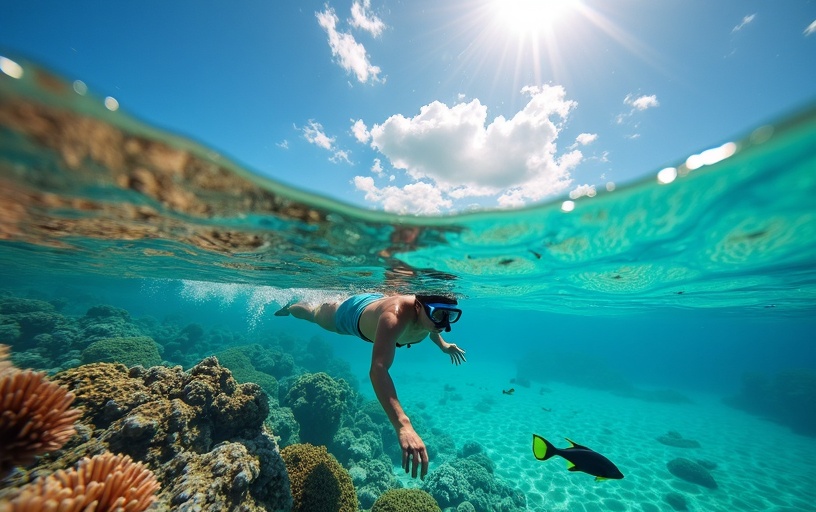
The crystal-clear lagoon surrounding Île aux Cerf is one of the finest snorkeling destinations in the Indian Ocean. Protected by a barrier reef that creates calm, shallow waters, this area offers incredible underwater visibility, vibrant coral formations, and an abundance of tropical marine life that will leave you breathless.
While many visitors to Île aux Cerf focus on the beaches and water sports, the snorkeling opportunities here are world-class and should not be missed. Whether you are a complete beginner or an experienced snorkeler, the reefs around Île aux Cerf have something spectacular to offer.
## Why Île aux Cerf Is a Snorkeling Paradise
Several factors combine to make the waters around Île aux Cerf exceptional for snorkeling.
**Crystal-Clear Visibility:** The lagoon water is filtered by the barrier reef, resulting in visibility that regularly exceeds 20 meters and can reach 30 meters on calm days. This clarity means you can see coral formations, fish, and other marine life in stunning detail.
**Calm, Protected Waters:** The barrier reef breaks incoming ocean swells, creating a calm lagoon with minimal current. This makes snorkeling safe and comfortable, even for beginners and children. You can float effortlessly and focus on the underwater scenery.
**Shallow Reef Access:** Many of the best coral formations are in just 2-4 meters of water, easily accessible without diving. You can see everything from the surface with just a mask and snorkel.
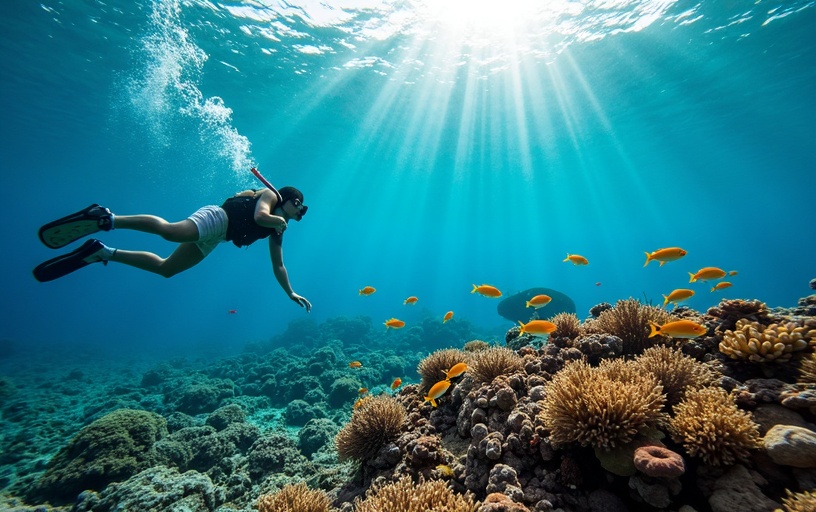
**Diverse Marine Life:** The healthy reef ecosystem supports over 200 species of fish and 40 species of coral. The variety of colors, shapes, and behaviors you will observe is remarkable.
**Warm Water Year-Round:** Water temperatures range from 24°C in winter to 28°C in summer, comfortable for extended snorkeling sessions without a wetsuit.
## Top Snorkeling Spots Near Île aux Cerf
### 1. The Eastern Reef of Île aux Cerf
The eastern side of Île aux Cerf has the best shore-accessible snorkeling. The coral reef begins just 20-30 meters from the beach, making it easy to reach without a boat.
The reef here features a mix of hard and soft corals, including massive brain corals (some over 2 meters in diameter), branching staghorn coral, delicate table corals, and colorful soft corals that sway with the current.
Fish life is abundant. You will see schools of blue-striped snappers, clouds of orange anthias, territorial damselfish guarding their coral patches, and curious wrasses following you as you swim. Parrotfish are everywhere, their bright colors and crunching sounds (they eat coral) unmistakable.
The depth ranges from 1.5 to 4 meters, perfect for snorkelers of all levels. The sandy patches between coral heads are home to blue-spotted stingrays, sea cucumbers, and occasionally octopuses.
**How to Access:** Walk to the eastern beach of Île aux Cerf (15-minute walk from the main beach). Enter the water from the sandy beach and swim toward the reef. Wear water shoes for the rocky entry points.
### 2. The GRSE Waterfall Reef
Near the Grand River South East waterfall, where fresh water meets the ocean, a unique reef ecosystem thrives. The mix of fresh and salt water creates conditions that support different species than the open lagoon.
The coral here is less extensive but the fish life is exceptional. Large schools of mullet, snappers, and jacks congregate near the waterfall. The nutrient-rich water from the river attracts feeding fish, creating a lively underwater scene.
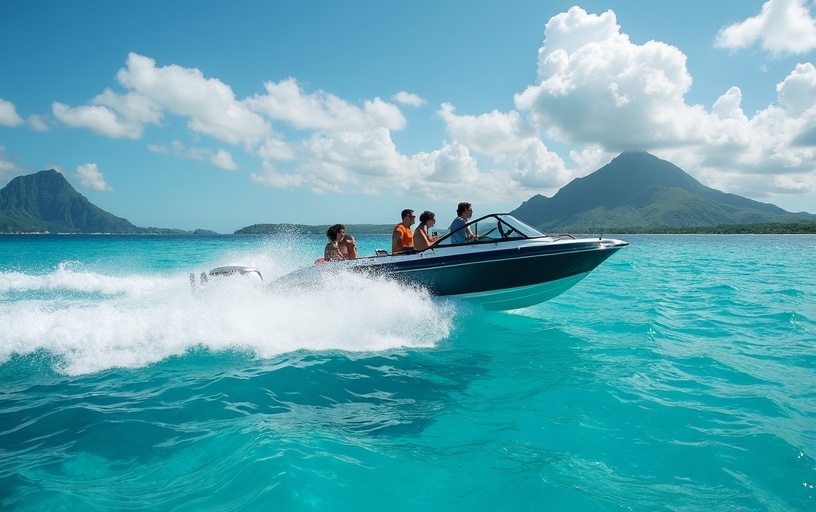
Most catamaran cruises pass the waterfall but do not stop for snorkeling. If you are on a private speed boat tour, ask the driver to anchor here for a unique snorkeling experience.
**How to Access:** By boat only. Request a snorkeling stop near the waterfall on private tours.
### 3. The Coral Garden (Between Île aux Cerf and Mainland)
In the middle of the lagoon between Île aux Cerf and the mainland, there is an area known locally as the Coral Garden. This shallow reef (2-3 meters deep) features some of the healthiest coral formations in the east coast lagoon.
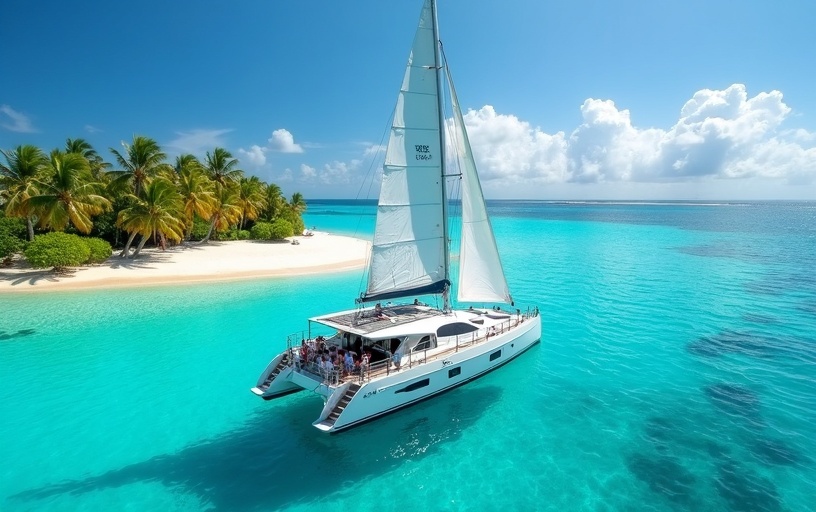
The Coral Garden is a popular stop on catamaran cruises. The crew anchors the boat and provides snorkeling equipment. The reef is easily accessible from the boat — just slip into the water and you are surrounded by coral and fish.
Highlights include massive table corals that look like underwater mushrooms, colorful anemones with resident clownfish (just like Finding Nemo), and schools of butterflyfish in pairs. The sandy areas between coral heads are home to garden eels — thin, snake-like fish that sway in the current like underwater grass.
**How to Access:** Most catamaran cruises include a stop here. Private boat tours can also visit.
### 4. Île de la Passe Historic Reef
Île de la Passe is a tiny island near Île aux Cerf that was a French military outpost in the early 1800s. The ruins of the fort are visible above water, but the real treasure is below the surface.
The submerged walls and foundations of the old fort have been colonized by coral over two centuries, creating an artificial reef that attracts an incredible diversity of marine life. Large groupers hide in the crevices, moray eels peer out from holes in the walls, and schools of snappers circle the structure.
The combination of history and marine life makes this a unique snorkeling experience. Swimming over 200-year-old ruins covered in living coral is both fascinating and beautiful.
The depth around the ruins ranges from 3-6 meters, suitable for confident snorkelers. The current can be slightly stronger here than in the sheltered lagoon, so this spot is better for intermediate snorkelers.
**How to Access:** By boat only. Not all operators visit this spot — ask specifically when booking.
### 5. The Blue Bay Marine Park (Nearby)
More Snorkeling & Underwater Experiences
While not directly at Île aux Cerf, Blue Bay Marine Park is just 30 minutes south by car and offers the best-protected snorkeling in Mauritius. The marine park status means fishing and anchoring are prohibited, resulting in exceptionally healthy reefs.
Blue Bay has over 50 species of coral and hundreds of fish species. The coral gardens are just 20-30 meters from shore, easily accessible for all levels. Glass-bottom boat tours are available for those who prefer to stay dry.
If you are spending multiple days in the east coast area, combining an Île aux Cerf trip with a Blue Bay snorkeling session gives you the best of both worlds.
**How to Access:** Drive to Blue Bay (southeast coast). Snorkel from the beach or take a glass-bottom boat tour.
## Marine Life You Will Encounter
### Common Fish Species
**Parrotfish:** The most visible fish on the reef. Their bright blue, green, and pink colors are unmistakable. You will hear them before you see them — the crunching sound of their beak-like teeth scraping algae from coral is surprisingly loud.
**Butterflyfish:** These elegant fish swim in pairs and are easily identified by their flat, disc-shaped bodies and bold patterns of yellow, white, and black. They feed on coral polyps and are indicators of reef health.
**Clownfish (Anemonefish):** Made famous by Finding Nemo, clownfish live in symbiosis with sea anemones. The anemone tentacles are toxic to other fish but not to clownfish, which shelter among them. Look for orange fish darting in and out of anemone tentacles.
**Surgeonfish:** Named for the scalpel-like spine near their tail, surgeonfish come in various colors — powder blue, yellow, and striped varieties are common. They graze on algae in large schools.
**Moorish Idol:** One of the most beautiful reef fish, with bold black, white, and yellow stripes and a long, trailing dorsal fin. They are less common than other species, making a sighting special.
**Lionfish:** These striking fish have elaborate, fan-like pectoral fins with venomous spines. They are beautiful but should be observed from a distance. They are often found hiding under ledges and in crevices.
### Other Marine Life
**Sea Turtles:** Green sea turtles are occasionally spotted in the lagoon, especially near seagrass beds. They surface to breathe every 5-10 minutes. If you see one, observe from a distance and never chase or touch.
**Blue-Spotted Stingrays:** These beautiful rays rest on sandy patches between coral heads. Their blue spots on a tan body make them easy to identify. They are harmless if left alone — just avoid stepping on them.
**Octopuses:** Masters of camouflage, octopuses are common but hard to spot. Look for unusual textures or colors on rocks and coral. If you see one, watch it change color and texture — it is mesmerizing.
**Sea Cucumbers:** These sausage-shaped creatures are common on sandy areas. They are harmless and play an important role in the ecosystem by recycling nutrients.
**Moray Eels:** These snake-like fish hide in coral crevices with just their heads visible. They look intimidating with their constantly opening and closing mouths (they are actually breathing), but they are not aggressive unless provoked.
## How to Get the Best Snorkeling Experience
### Timing
**Best Time of Day:** Morning (8-11 AM) offers the calmest water and best visibility. The sun is at an angle that illuminates the reef beautifully. Afternoon winds can reduce visibility.
**Best Months:** October to March for warmest water (26-28°C) and best visibility (up to 30 meters). The marine life is most active during warmer months.
**Tide Considerations:** Mid-tide is ideal. Low tide can make some areas too shallow (risk of touching coral). High tide provides better access but slightly reduced visibility.
### Equipment Tips
Bring your own mask if possible — a well-fitting mask makes an enormous difference. Rental masks from tour operators are functional but often leak or fog.
Anti-fog your mask before entering the water. Spit in the lens, rub it around, and rinse lightly. Or use commercial anti-fog spray.
Fins are not essential in the shallow lagoon but helpful for covering more distance. Short fins are easier to use than long ones.
A rash guard provides better sun protection than sunscreen and does not wash off in the water. Your back is most vulnerable to sunburn while snorkeling face-down.
A waterproof camera or phone case is essential for capturing the underwater beauty. Even budget waterproof cameras produce great results in the clear water.
### Snorkeling Technique
Breathe slowly and deeply through your snorkel. Rapid breathing fogs your mask and wastes energy.
Float on the surface and let the current carry you gently. Avoid excessive kicking — it disturbs marine life and stirs up sand.
Getting to Île aux Cerf
Keep your fins above the coral. Fin kicks are the most common cause of coral damage. Maintain good buoyancy and swim above the reef, not through it.
Move slowly and look carefully. Many of the most interesting creatures are small or camouflaged. Rushing through the reef means missing the best sights.
## Environmental Responsibility
The reefs around Île aux Cerf are a precious ecosystem that needs protection. Follow these guidelines to minimize your impact:
**Use only reef-safe sunscreen.** Regular sunscreen contains oxybenzone and octinoxate, chemicals that bleach and kill coral. Look for mineral-based formulas with zinc oxide or titanium dioxide.
**Never touch or stand on coral.** A single touch can kill coral polyps. Coral grows slowly — damage can take decades to recover. Maintain good buoyancy and keep your distance.
**Do not feed fish.** Feeding disrupts natural behaviors and can harm fish health. It also attracts aggressive species.
**Do not collect anything.** Shells, coral, starfish, and other marine life should stay in the ocean. Removing them is illegal in marine parks and harmful to the ecosystem.
**Control your fins.** Careless fin kicks break coral and stir up sediment. Swim gently and be aware of your surroundings.
## Snorkeling Tours vs Independent Snorkeling
**Guided Tours (Catamaran or Speed Boat):** Tours take you to the best spots, provide equipment, and offer safety supervision. The crew knows where the healthiest coral and most fish are. Tours are ideal for first-time snorkelers and those without their own equipment.
**Independent Snorkeling from Île aux Cerf:** If you visit the island independently (by speed boat transfer), you can snorkel from the eastern beach at your own pace. Bring your own equipment for the best experience. This option offers more freedom but no guidance or safety supervision.
**Our Recommendation:** For first-time visitors, a catamaran cruise with snorkeling stops is the best option. You get guided access to the best spots plus the full cruise experience. For experienced snorkelers returning to the area, independent snorkeling from the eastern beach offers more time and freedom.
## Frequently Asked Questions
**Do I need to know how to swim to snorkel?**
Basic swimming ability helps, but life jackets are available for nervous swimmers. In the shallow lagoon (1-2 meters), you can stand in many areas. Glass-bottom boats offer a dry alternative.
**Is snorkeling safe for children?**
Yes, the calm, shallow lagoon is ideal for children. Life jackets are provided in child sizes. Supervise children at all times and stay in shallow areas. Children as young as 5-6 can snorkel with proper equipment and supervision.
**What if I see a shark?**
Shark sightings in the lagoon are extremely rare. The reef sharks that occasionally visit are small (1-1.5 meters) and not dangerous to humans. They are more afraid of you than you are of them. Enjoy the sighting — it is a privilege.
**Can I snorkel if I wear glasses?**
Yes. Prescription snorkeling masks are available from some operators. Alternatively, contact lenses work well under a regular mask. Some masks fit over small glasses frames.
## Book Your Snorkeling Adventure
The reefs around Île aux Cerf offer some of the most accessible and beautiful snorkeling in the Indian Ocean. Whether you join a catamaran cruise with guided snorkeling stops or explore independently from the island beaches, the underwater world here will amaze you.
Our catamaran cruises and speed boat tours include snorkeling at the best spots around Île aux Cerf, with quality equipment, experienced crew, and small group sizes for a better experience.
Book your tour today and discover the underwater paradise that makes Île aux Cerf one of the top snorkeling destinations in Mauritius.
For more snorkeling information, read our Complete Guide to Snorkeling in Mauritius. Planning your Île aux Cerf visit? Check out our Ultimate Guide to Île aux Cerf Cruises.
Related Activities You Might Enjoy
Get Mauritius Travel Tips in Your Inbox
Join 5,000+ travelers receiving weekly insider tips, exclusive deals, and destination guides.